
A cleaner kitchen counter should not leave you wondering whether your child, pet, or next meal is exposed to harsh residue. When customers ask what cleaning products are safe, the honest answer is not one brand or one ingredient. A safe choice depends on the surface, the cleaning task, who uses the space, and whether the product is used exactly as directed.
For most homes, offices, apartments, and rental properties, the best approach is simple: use the mildest effective product for the job, follow the label, and reserve stronger disinfectants for situations that truly require them. That protects your space without sacrificing the clean, fresh results you expect.
What Cleaning Products Are Safe for Everyday Use?
Safe cleaning is about reducing unnecessary risk, not assuming that "natural" automatically means harmless or that a stronger smell means a better clean. Even plant-based products can cause eye, skin, or breathing irritation if they are concentrated, sprayed in a small room, or mixed with another cleaner.
For routine cleaning, products labeled for general-purpose cleaning, dishwashing, bathroom cleaning, or glass cleaning are often sufficient when used according to instructions. Look for clear directions, ingredient disclosure when available, and products designed for the exact surface you are cleaning. Fragrance-free or low-fragrance options can be a practical choice for households with asthma, allergies, infants, or scent-sensitive family members.
A safer product also has to be used safely. Do not assume that using extra product will produce a better result. Overuse can leave residue on floors, counters, and furniture, while making rinsing more difficult. A properly diluted cleaner applied with a clean microfiber cloth is often more effective than a heavy spray-and-wipe routine.
Read the Label Before You Clean
The product label tells you far more than the front-of-bottle marketing. It identifies where the cleaner can be used, whether it needs dilution, how long it must remain wet to disinfect, and what protective steps are recommended.
Pay attention to signal words. “Caution” generally indicates a lower level of hazard than “warning” or “danger,” but every product should be stored and handled carefully. If a label says to use gloves, ventilate the area, rinse the surface, or keep children and pets away until dry, treat those instructions as part of the cleaning process.
For a product that will touch food-preparation surfaces, check whether rinsing is required after cleaning. Kitchen counters, high-chair trays, and dining tables should be clean without leaving chemical residue behind. In most cases, washing with a suitable cleaner and rinsing when directed is enough for daily maintenance.
When choosing products, it can help to look for third-party safety certifications, such as EPA Safer Choice, but certification is only one factor. A certified product can still be misused. The safest option is always the right product, at the right concentration, for the right task.
Match the Product to the Room and Surface
One cleaner cannot safely handle every job. Using the wrong formula may damage a surface, create residue, or expose people to stronger chemicals than needed.
Kitchens
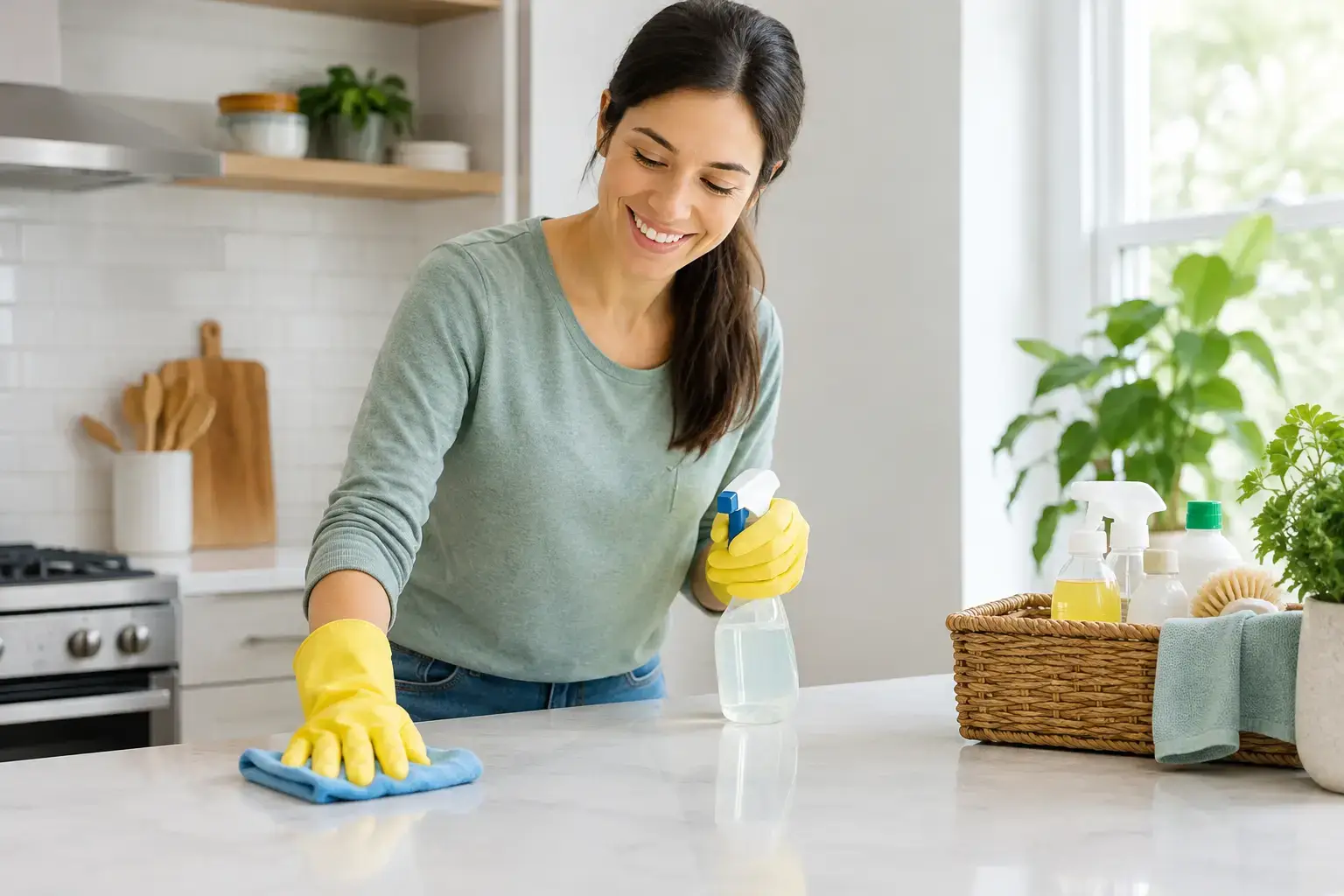
For routine kitchen cleaning, a mild all-purpose cleaner or dish soap solution can remove grease, crumbs, and everyday spills from sealed counters, cabinet fronts, and appliance exteriors. Food-contact surfaces should be rinsed if the label requires it.
Disinfectants are most useful after raw meat spills, illness in the household, or contamination concerns. First remove visible soil. Disinfectant works best on a surface that has already been cleaned, and it must stay wet for the contact time listed on the label. Wiping it away immediately may not provide the result you need.
Be especially careful with natural stone, unfinished wood, and specialty finishes. Acidic cleaners, including vinegar-based formulas, can dull or etch marble, limestone, travertine, and some grout. A pH-neutral stone cleaner is usually the safer choice for these surfaces.
Bathrooms
Bathrooms need products that handle soap scum, mineral buildup, and germs, but stronger is not always better. A non-abrasive bathroom cleaner is a reliable option for most sinks, tubs, showers, and tile. For hard-water deposits, use a product specifically approved for the fixture material and avoid abrasive powders on delicate finishes.
Bleach-based products can be appropriate for certain mold or mildew concerns on nonporous surfaces, but they require ventilation and careful handling. Never use bleach on a surface unless the manufacturer permits it, and never rely on it as a substitute for removing the underlying moisture problem.
Floors and High-Touch Areas
For sealed hard floors, use a cleaner made for that flooring type and avoid soaking the surface. Too much water can damage wood, seep into laminate seams, or leave slippery residue. Microfiber mops and properly diluted floor cleaners provide effective everyday results with less product.
Door handles, light switches, keyboards, faucets, and shared office surfaces may need more frequent attention during cold and flu season. Clean first, then disinfect only when appropriate. In an office or Airbnb turnover, this targeted method keeps high-touch areas hygienic without coating the entire space in unnecessary chemicals.
Cleaning and Disinfecting Are Different Jobs
Cleaning removes dirt, grease, dust, and many germs from a surface. Disinfecting uses a product designed to kill or inactivate specific germs. Both have a place, but they are not interchangeable.
A regular cleaning routine is enough for many situations. Disinfection makes more sense after a known illness, in a shared workspace, during a rental turnover, or where there has been contact with bodily fluids. Over-disinfecting can irritate lungs and skin, especially in poorly ventilated rooms, without making a normally maintained home meaningfully cleaner.
Ventilation matters whenever you use sprays or stronger formulas. Open a window when possible, run the bathroom fan, and avoid spraying products directly into the air. Applying cleaner to a cloth first can reduce airborne mist and give you better control over where the product goes.
Products You Should Never Mix
The most serious cleaning safety rule is simple: do not mix products unless the manufacturer specifically says you can. Combining cleaners can create dangerous fumes or reactions, even when each product is safe on its own.
Never mix bleach with ammonia, vinegar, toilet bowl cleaner, rubbing alcohol, or another disinfectant. Do not layer different products in a toilet, sink, shower, or spray bottle. If you switch products, rinse the area thoroughly and allow it to dry first.
Keep products in their original containers with labels intact. Transferring cleaner into an unmarked bottle, drink container, or food jar creates an avoidable poisoning risk. Store all products out of reach of children and pets, ideally in a secured cabinet away from food and medications.
Safer Cleaning for Pets, Children, and Sensitive Households
Pet-safe cleaning does not mean allowing pets into a freshly treated area. Let surfaces dry completely before children or animals return, particularly floors, rugs, upholstered furniture, and low tables where hands and paws make frequent contact.
For homes with pets, avoid essential-oil-heavy products unless you have confirmed they are appropriate for your animal. Cats, birds, and small pets can be particularly sensitive to airborne fragrances and concentrated oils. Good ventilation, modest product use, and proper drying time make a real difference.
If someone in the home has asthma, allergies, eczema, or chemical sensitivity, choose unscented products where possible and test a new cleaner in a small area. A product that is safe for a surface may still be unpleasant for a person who is sensitive to fragrance or airborne spray.
When Professional Cleaning Helps
Deep cleaning a move-out, post-construction site, office, or busy rental property often involves multiple surfaces with different care requirements. Trained specialists can select appropriate products for stone, stainless steel, wood, glass, fixtures, and flooring while reducing the risk of surface damage or chemical misuse.
At 4A Easy Clean LLC, our cleaning approach focuses on effective, eco-friendly, and pet-safe product options matched to the needs of the space. Whether you need recurring home cleaning or a detailed turnover in the South Bay, the goal is the same: a visibly clean property that feels comfortable to use.
The safest cleaning routine is not the one with the most products under the sink. It is the one that keeps your home or workplace clean, uses each product with care, and leaves the people and pets who rely on that space protected.